

The value of human content at #FOMT25
Meet the Future of Media Awards winners. And a new press freedom project.

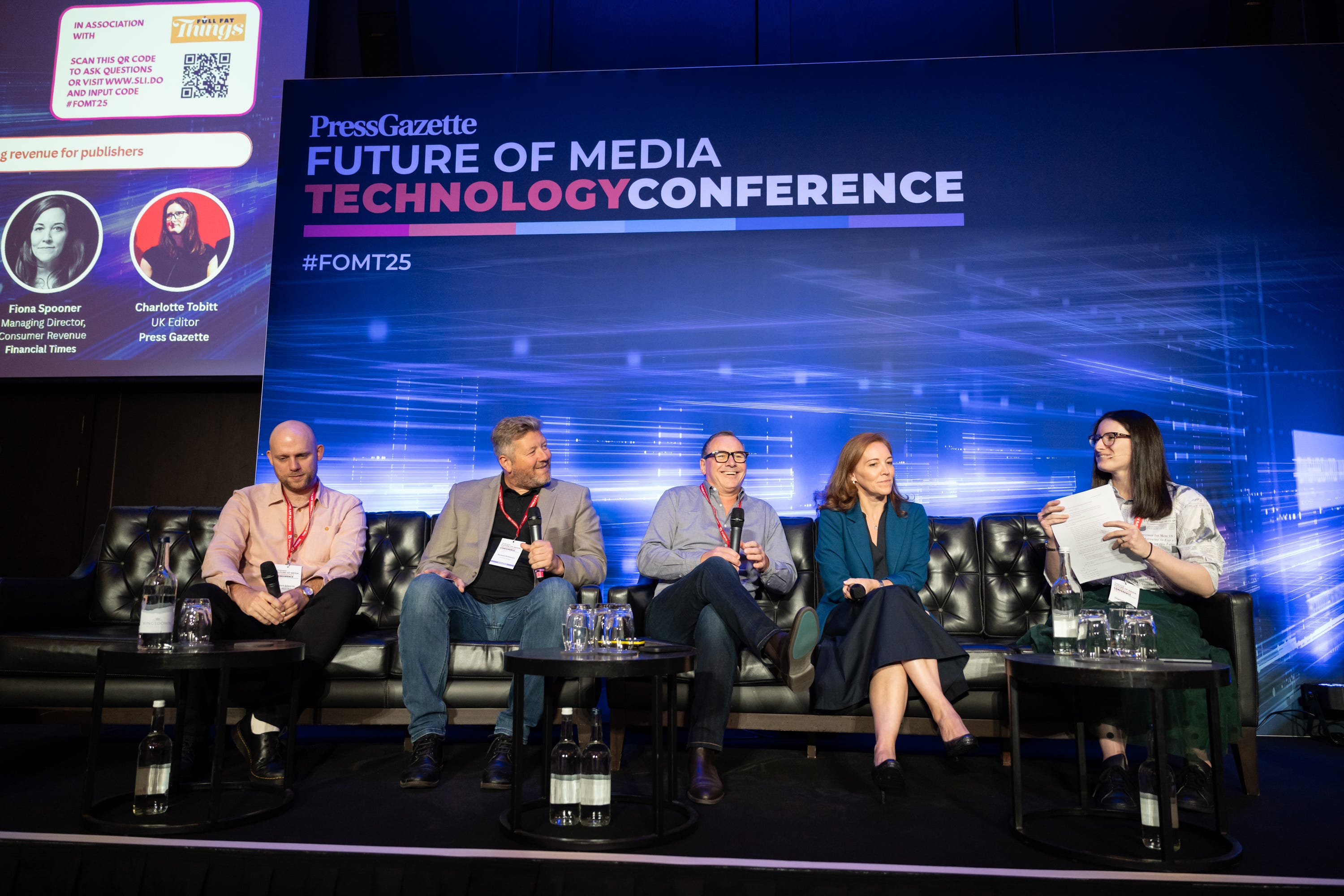
I went to the Future of Media Technology Conference yesterday, a one-day masterclass for media leaders on how to thrive in the digital age.
It’s a big day in the media calendar, so I was keen to go, but a heavy AI agenda this year - not sure I can handle more on AI as a threat and an opportunity for publishers. But it’s where the money is, and we’re trying to make sense of it all.
I like to see what creators can learn from corporate strategy – and vice versa. Also curious to know what publishers are doing with newsletters (Substack came up several times in the first hour!).
Thanks to the team for a brilliant day. Yes, AI is here to stay, but the mood was positive, focusing on humans, quality journalism, and building connection with readers – using AI to help.
Also a cry to keep things simple and not try to do too much - a common problem for publishers ;-)
Some comments:
“We’ll see a return to original reporting, unique podcasts and journalism.” – Matthew Monaghan, President, ARC XP.
“Great content comes from human beings.” – Andy Morley, CRO, The Independent.
“We’ll start to see a premium play out on human-generated content.” – Martin Ashplant, Product Dev & Ops, PA Media.
Quote of the day from Sheena Peirse at MediaHaus Ireland, on paywalls: “Don’t underestimate your value.”
Some funny bits too. Someone rang a bell to get us back into the classroom. All this tech talk – saved by the bell!
Dominic on Charlotte: “She’s the Blackadder to my Prince Regent.” Appreciate you for keeping it real and jargon-free. Vectorisation might be important, but I’ve no idea what it is.
I hate small talk, which makes networking awkward. Lots of folks on laptops/phones, so I'm not alone (tech is a crutch – it’s replaced ciggies). Had a chat with Charlotte at The Addition (see her liveblog) and Ian Morling – interesting initiative around press freedom based on Le Monde model, which he’s keen for newspapers to adopt in the UK.
Maybe a speed networking area to make it easier for Billy No Mates like me and Ian to make friends. TPC did this at their Portfolio Careers Festival – a nice touch.
Future of Media Awards 2025 – see the winners. Loved the visual story by the FT: Are the robots finally coming? Congrats to The Lead Editors for winning local Newsletter of the Year!
My #FOMT25 takeaways and slides below.
N x
Opening keynote w/ Luke Bradley-Jones, President, The Economist and Dominic Ponsford, EIC, Press Gazette.
On making money: As well as paid subs they do events (130 this year, sponsor-led), consulting, and Economist Intelligence, their B2B data analysis tool is doing well.
On marketing: Interesting to hear advertising isn't their focus this year. Radio and traditional channels are performing better than podcasts.
Q&A: What's stopping them let their journos start newsletters? Time and energy – they're busy doing other stuff. It would overstep the mark (having their own newsletter as a separate revenue stream) rather than being part of the collective Economist voice.
"It would tip over into a space where we're prioritising personality over the Economist voice."
How do we survive and thrive in 2025? Differentiation – how are you different? Creating a ‘sticky’ product experience - habit-forming. Collaborating – who will you partner with to be stronger together than apart?
Presentation: Can AI and Personalisation Unlock Sustainable Revenue Growth for Publishers? Matthew Monaghan, President, ARC XP (tech for newsrooms).
A tour de force through publisher AI. What they’re doing with AI at WaPo to reinvent journalism and empower journalists.
Traditional media is broken. They’ve seen a drop in direct relationship with Gen Z. Young people expect multimedia content that’s interactive and personalised (which often causes issues in newsrooms). ‘Audience 5.0’ are co-creators and invested in the work.
On AI – new tech unlocks the ability to ask questions, so the audience interacts more deeply. Their chatbot has been a useful experiment – new article ideas and angles.
Interactivity – when you read an article you can go ↑or ↓ a level inside the story, which can help people understand the problem better. This helps with a passive audience.
On creating experiences – they’re trying to build the type of experience the audience expect – a level up from a CMS, e.g. personalisation (if you’ve read 10 articles on Gaza you don’t need to know where Gaza is). Someone said, “we’re moving beyond CMS into more intelligent products.”
They want to build a marketplace to share learnings with other companies.
Q&A – will we see the death of the article? We have AI summaries, video, sound, raw files etc. No! We still need amazing text stories.
Interesting comment about the conversation on GenAI being overblown and industry leaders backing away. In 2-3 years LLMs will become a library tech teams use.
What’s the key to success for publishers? Pay attention to where you invest money. Take big, bold risks now. Be unique. SEO/aggregation is over. “A return to trying to do original reporting, unique podcasts and journalism.”
Panel: How Reader Data is Driving Revenue for Publishers. Mark Edwards, Group Digital Director, Reach PLC, Andy Morley, CRO, The Independent, Stewart Robinson, Founder, Full Fat Things, Fiona Spooner, MD of Consumer Revenue, FT, Charlotte Tobitt, UK Editor, Press Gazette.
On lead gen and reader intelligence services, how best to collect reader data, monetise it and create sticky content.
Andy said he saw a gap for a shorter, punchier product so they created the Bulletin digest (written by journos, curated and subbed by AI). This has generated jobs and created new audiences.
“Great content comes from human beings.” – Andy Morley.
The FT is driving engagement with their comments section and encouraging people to join the convo. A deeper understanding and it’s habit-building (the value of comment sections came up many times).
Case Study 1: From Paywalls to Growth Engines: Unlocking Digital Subscriptions with AI. Ariel Burkett, VP of Global Sales & Marketing Mather. Johanna Suhonen, VP of Content Business, Alma Media, Charlotte Tobitt.
Publishers are rethinking the role of paywalls in growth strategy. How Alma Media, one of Finland’s leading media groups (flagship biz daily called Kauppalehti), is using AI to unlock new opportunities.
They’ve partnered with Mather, the publisher behind the ‘Sophi Dynamic Paywall Engine’ on growth and it’s working – see the case study. 15 out of 65 daily articles are behind a paywall – AI helps them target the right users at the right time.
No top tips for growth - you need to rethink your strategy all the time.
Case Study 2: From Print to Platform to Personalisation: How O’Reilly Media is Navigating AI’s Existential Crossroads. Julie Baron, CPO, O’Reilly Media, Lucky Gunasekara, Co-founder, CEO, MISO AI, Dominic Ponsford.
More on AI as a threat and an opportunity for publishers. Julie and Lucky shared insights from O’Reilly’s journey through two software transformations.
“The internet was built on O’Reilly books!”
They’ve made a leap from print publishing to a subscription-based learning marketplace, ft. tech and biz books, courses, live events and workshops, and second, an AI-driven platform for personalised online learning.
Partnering with Miso helped them pioneer expert AI agents, personalisation at scale, and one of the industry’s first AI royalty programs for authors. Here’s how it works – O’Reilly Answers cites its sources and allocates royalties to original creators.
Remember, “we’re publishing content for humans and AI.”
A passionate plea - if the bots are scraping and crawling our sites we should be pushing back and doing the same to them!
Lucky on The Hamburger Law: “You can turn steak into hamburger, but you can’t turn hamburger back into steak.” (best slide of the day!)
Panel: Winning Video Strategies for Publishers. Richard Headland, Founder & Editorial Director, RSS Media, Connie Krarup, Media Lead, Q5, Jonathan Levy, MD & Exec Editor, Sky News, Jonny McGuigan, Exec Editor: Growth, Social & Weather, BBC, Brian Whelan, Director of Video & Audio, Hearst.
How they’re reaching new audiences through video, monetisation strategies, and challenges organising the newsroom.
Connie said, “This rise of video we’re seeing does feel different.” It’s a bi-modal way of working – breaking news and long-form quality journalism through video.
Good to hear YouTube has a better relationship with creators – Sky News is generating revenue from some of its work on YouTube.
The BBC has a video heritage – 36 years of video storytelling. With the rise of personality-led news and the influencer economy, they want to differentiate and tell stories.
Richard asked, “Is it realistic to expect journos to do it all? Text, video etc when there are different skillsets. No – but we can all learn new skills and nurture our specialisms. It’s lazy to expect everyone to be able to do everything – homogenised work.
We’re all trying to do too much. “It’s a common problem for publishing houses.” Work out if it aligns with your strategy.
What about monetising video? What’s had most commercial success? YouTube and long-form digital video. “A good YouTube channel should be making brands £1M a year.”
What role is AI playing in video production? It takes away some of the grunt work - being used for transcription, headlines and summaries. Humans will double check it!
How do we reach Gen Z? Vertical video is super important. How do we package our journalism in a way that’s native to the platforms?
Social platforms are a problem for Sky - retaining and converting viewers into consumers is a challenge.
How can smaller publishers increase video content when they have less resources? Connie said it’s fantastic to see the shift to video - latest Ofcom report shows increasing YouTube use. It’s about prioritisation and ROI – look at what you do well and want to protect. What can you delegate? Pilot and test new things e.g. smartphone stories.
“The story and audience are at the heart of this.” An engaged community and brilliant journalism can be successful.
When you’re hiring, how high do video skills rank? They’re important but the BBC video team is an ‘elite unit’ that draws on the skills of the journos around them. They will upskill staff.
Top tips for succeeding in video in 2025? Story always wins, build community not just a destination. Be ready to upend and start over. Have difficult conversations at C-suite level. Get on and do stuff!
Case Study 2: Digitally Transforming the Business and Growing Subscribers from Zero to 100k in 5 years. Paul McCarthy-Brain, CEO/Founder, Flip Pay, Sheena Peirse, CCO, MediaHaus Ireland, Dominic Ponsford.
Sheena on MediaHaus’ transformation from print-focused mode, where digital access was given away, to over 100k paying subs in a market of just 5m people. Working on getting to their next 100k paid subs!
Flip Pay manages the tech and monetisation strategy – a dynamic paywall, subs management, customer service and data solutions have helped them unify the web, app, e-paper and print under a single platform so MediaHaus can focus on content and audience growth.
In 2020, they added a hard premium paywall. “The minute you put up a paywall, you will get subscribers.”
Then they tried a metered paywall for flexibility and to drive registrations. People get 5 free stories a month. They’ve experimented with the best offers / prices for intro periods – one month for one EUR doesn’t work! Pay 40% for one year is a decent discount.
Quote of the day: “Don’t underestimate your value.” (we all need to hear this).
She recommends paid social as an acquisition strategy. Performance marketing is a significant channel. But be mindful… “we’re all working with so much data. You can go down rabbit holes with data.”
What other growth strategies are working? Flip Pay US is moving people to a donation, non-profit model, e.g. the American Journalism Project. Paul said they’re seeing a lot of this abroad.
Panel: How Can Publishers Pitch Their Inventory Quality to Brands? Karen Eccles, CCO, The Telegraph, Imogen Fox, CAO, The Guardian, David Goddard, SVP of Biz Dev, Measurement and Publisher Solutions, DoubleVerify, Arshiya Nazir, Director of Programmatic Strategy, Dentsu, Charlotte Tobitt.
Brand safety, viewability, tackling fraud and curating inventory to maximise advertiser engagement and direct-sold ad revenue.
News is a safe place to spend your money. Advertisers don’t see the full potential of news. DoubleVerify helps brands improve their online advertising.
“If you’re brave and advertise next to the news you’ll do well. Brilliant results. More people should do it!"
What about ad spend? Imogen said, “Don’t spend it all on social. Publishers [like the Guardian] offer culture and creativity.” It’s a different campaign and can give great results. Readers trust them. Agencies see this as sensible.
“Don’t turn off the social taps, turn them down a bit.”
Panel: Navigating the AI Web: The Publisher’s Path from Traffic to Trust. David Buttle, Founder, DJB Strategies, Caroline Fenner, CRO, PinkNews, Pietro Lambert, VP Products, LiveScore, Tom Rolfe, Director of Publisher Development, OpenWeb, Anna Sbuttoni, Deputy Ed of Digital, The Times & Sunday Times.
The first AI panel. Referral traffic is declining. AI-driven search is surfacing answers directly, which is affecting website views. They talked about new ways for publishers to build community, loyalty and interaction – and make money from an engaged audience.
Anna said Reddit and ChatGPT are good for conversions. We don’t want to rely on Google search.
The Sunday Times is going back to basics – what do our subscribers need from us? Evergreen content, habit-forming e.g. polls, competitions, newsletters and community features. Focused on getting subscribers into the app – they’ve spent two years developing it. It’s fast-growing and has helped with retention – people are reading widely and deeply.
The app creates a feeling of belonging – people can comment as a subscriber privilege. “People often read the comments before the content.”
Tom said, “social almost encourages toxicity.” Good to hear moderation at PinkNews is done by humans. The ST has switched to real name commenting, which reduces toxicity. No masks!
The ST is using Reddit to find an audience and bring people back to the site. It’s favoured by Google so an opportunity for publishers.
PinkNews on strong editorial – “emotion and understanding are so important for people. It’s why we’re here.” Events bring people together so they’re doing more of them. “Post Covid everyone wants to meet up and do things.”
Anna said the ST has 25 newsletters and needs to sort out their onboarding, experience and flow… (a job opp there!?).
Case Study 3: How AI is Helping Delphi Meedia Secure Its Market Dominance in the Baltic States. Ivar Krustok, Chief AI & Innovation Officer, Delfi Meedia, Dominic Ponsford.
With 200k online subscribers, news publisher Delfi Meedia reaches 21% of the population in Estonia (a world record). Chief AI officer Ivar on how AI is transforming the way they use audience data and super-charging editorial opportunities.
They offer ONE package and 45% of their content is behind a paywall. Interesting there’s no annual subscription – monthly works for them.
“The audience should decide what premium means to them.”
Their goal with AI is doing articles faster. “Gen AI is the rising tide that floats all boats.” - a huge opportunity for publishers.
On engagement – they have automated polls on articles, AI translation and are testing a knowledge bot. They use AI for personalisation, but it’s not cheap.
Translation has been their most successful AI experiment – the simple tools are the best. It can do a complex task in minutes.
How can smaller publishers use AI to compete? Partner with universities – they’re open to helping publishers. Explore EU funding. Partner with big tech – they got some funding from Microsoft.
Panel: Beats, Blocks & AI Bots: How Top Publishers Are Weathering the Waves of AI Disruption. Martin Ashplant, PD & Ops Director, PA Media, Stuart Forrest, Global Audience Director, Bauer Media, Dan Rua, CEO Admiral, Carly Steven, Director of SEO & Editorial E-com, Mail Online, Charlotte Tobitt.
Publishers on how they’re protecting their content from unwanted scraping and using AI in-house to drive efficiency and find new revenue.
Martin at PA Media – publishers are grasping the need not to rely on Google anymore.
Stuart at Bauer Media – ChatGPT is their biggest referrer!
Carly at Mail Online – DMG media has partnered with Prorata.ai, an AI platform that shares revenue with publishers each time their content is used to answer a user query.
Dan at Admiral (marketing automation platform for publishers) – we need tools and legislation to regulate the bots. It should be illegal to mimic humans. We need to work together and collaborate as an industry to protect our IP.
Martin at PA Media – we don’t want to get to the point where there’s no point creating original content i.e. everything is being summarised by AI.
We need more transparency around the algos. Where’s the data coming from in AI overviews? Overall, “I’m bullish on AI. It enables us to do interesting things,” e.g. archive searches and video.
“We’ll start to see a premium play out on human-generated content.” Good quality human content wins! 💪🏻
PA Media has launched Expert Hub to connect journos with experts who are vetted by humans.
Stuart on Grazia as a strong brand. “Humans will always create the content.” - they’ll use AI for research and trendspotting.
What should we all be doing? “Publishers must create 1:1 relationship with their visitors. Get them to maximum relationship e.g. email subscriptions.”
Masterclass: Resilient Content Businesses in the Age of AI. Sam Gould, AI Lead, FT Strategies, Adriana Whiteley Director, FT Strategies. Dominic Ponsford.
Last session - The FT Strategy (media consulting) team on how we can be more resilient in AI. They presented the FT Strategies’ toolkit, which helps publishers and media owners score their content across discoverability, defensibility and user value.
How to identify high-risk content types, adapt your strategy, and protect your revenue.
Adriana – Brits’ ‘Keep Calm and Carry On’ mentality (re AI) is ok for the t-shirt but rubbish for corporate strategy. Content is everywhere – we’ll see quality at scale. “Human content will be replaced if it’s not unique.”
Solutions: Go niche. Analyse user needs – does your current content meet them? Understand what people want. Create richer products that are sticky. Be resilient – identify your vulnerabilities.
What types of content do we create to futureproof ourselves? Avoid general, publicly available content. Develop a niche, specific product surveys, and data.
More people are using AI for search – esp. ChatGPT so they’re getting more ChatGPT referrals. 🌈